Here’s a short guide to some of Rome’s lesser-known spots away from the crowds that you can add to your itinerary. I’ve selected 3 gardens and 2 museums, depending on whether you want to immerse yourself in art or relax surrounded by nature.
1. Roseto Comunale
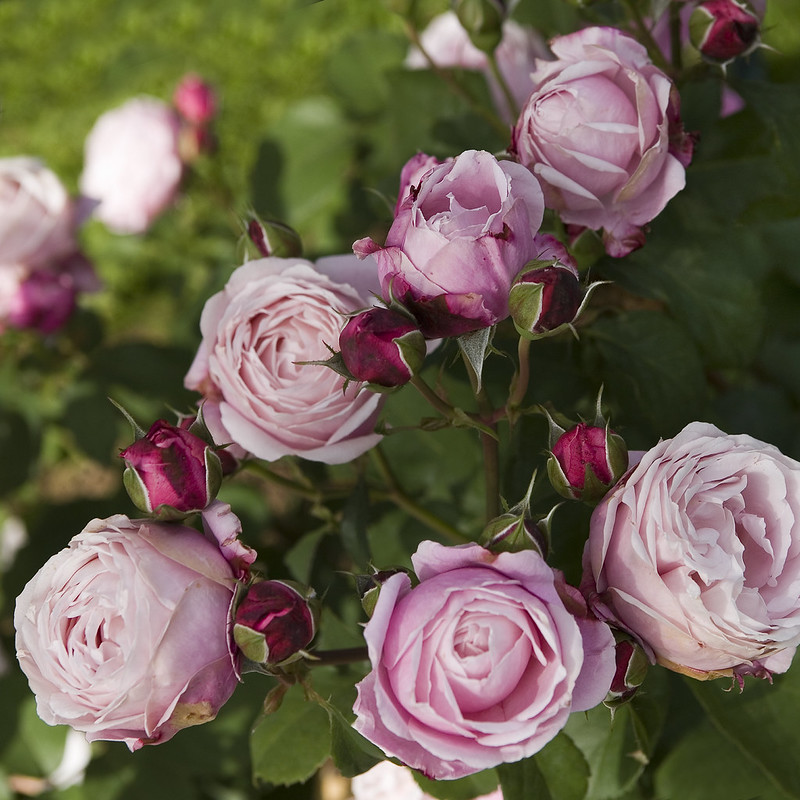
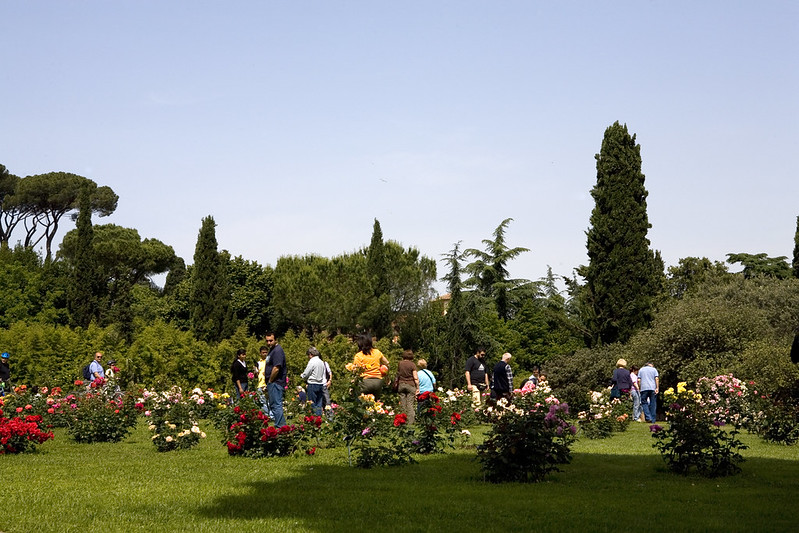
The Municipal Rose Garden is truly a garden that belongs to the Romans, who are very proud of it; every year, when it opens its gates, they fill its paths to admire the vast collection of roses on display and breathe in their delightful fragrance.
The garden is open during the spring. In 2026, it will be open until Sunday, June 14.
Located on the slopes of the Aventine Hill, it is home to more than 1,000 different varieties of roses from around the world: from the Far East to South Africa, from Old Europe to New Zealand, passing through the Americas.
The garden’s location offers spectacular views of the Circus Maximus, the ruins of the Palatine Hill, the bell tower of Santa Maria in Cosmedin, the dome of the Synagogue, the Vittoriano, and Monte Mario.
History of the Rose Garden
Since the 3rd century B.C., the site where the rose garden now stands has been dedicated to flowers and was home to a temple dedicated to the goddess Flora, who was honored during the spring festivities known as the “Floralia.”
Over the centuries, it has undergone several transformations. In 1645, it became the Jewish garden, with a small cemetery attached to it. In 1934, the Jewish cemetery was moved to Verano, and the area lay fallow until 1950, when it was designated to house the new municipal rose garden. This was a gesture of gratitude toward the Jewish community, which made it possible to recreate the rose garden in a sacred place. As a testament to this, a commemorative stele was placed at the garden’s entrance, and the paths were designed in the shape of a menorah, the seven-branched candelabrum that symbolizes Judaism.
Sections of the garden
The garden, shaped like an amphitheater, is divided into two sections by Via di Valle Murcia. The upper section houses a collection of botanical, heirloom, and modern roses, while the lower section features the roses entered in the “Premio Roma” competition and the winners from previous years. In total, the Rose Garden is home to approximately 1,100 species of roses from all over the world, including some particularly unusual varieties such as the Rosa Chinensis Virdiflora with its green petals, the Rosa Chinensis Mutabilis, which changes color over the course of several days, and the Rosa Foetida, known for its unpleasant odor!
Visit the rose garden
The entrance to the municipal rose garden is at Via di Valle Murcia n. 6 00153 Roma Open in Google Maps
The garden is open every day, including weekends and holidays, from Saturday, April 11, to Sunday, June 14, 2026 from 8.30 am to 7.30 pm.
Admission is free and open to everyone.
Click here to book a private guided tour of the Roseto Comunale in Rome.
2. Orto Botanico
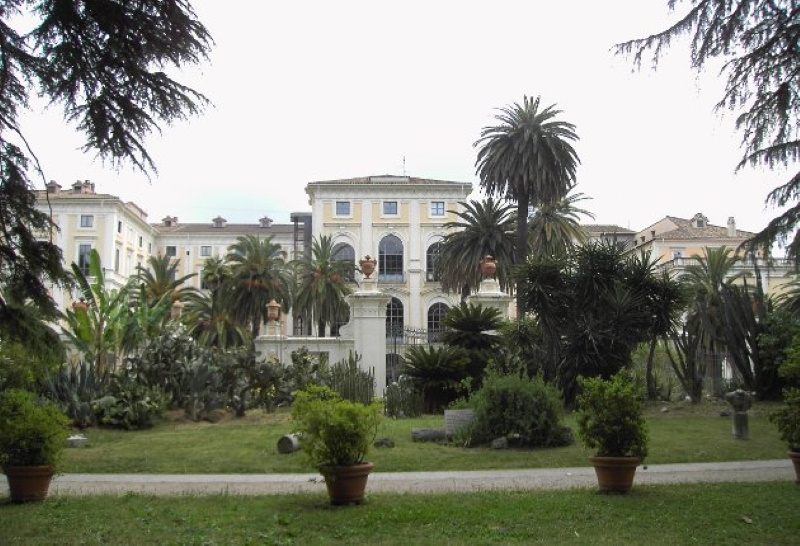
The Rome Botanical Garden is located in the heart of the city, between Via della Lungara and the Janiculum Hill. It is a magical place where you can take a stroll away from the hustle and bustle and admire the extraordinary variety of plant life preserved here.
Botanical Collections
It’s one of Italy’s largest botanical gardens, it covers 12 hectares and is home to native plant species from all over the world. Among the most notable collections are monumental, centuries-old trees such as cork oaks, Turkey oaks, oriental plane trees, and Himalayan oaks, and the bamboo collection, which is among the most extensive in Europe.
In the greenhouses, you can admire about 400 varieties of orchids and succulents. In the stone-lined planters, you’ll find the Herb Garden, with its myriad scents.
Cherry trees, camellias, and magnolias adorn the enchanting Japanese Garden, which offers a beautiful panoramic view of Rome. In the Mediterranean Garden, you’ll find species typical of the Mediterranean scrub, and in the Semplici Garden, you’ll find medicinal plants.
There are ponds, a stream, and a small lake home to Aquatic Plants, as well as a beautiful Rose Garden featuring about 60 varieties.
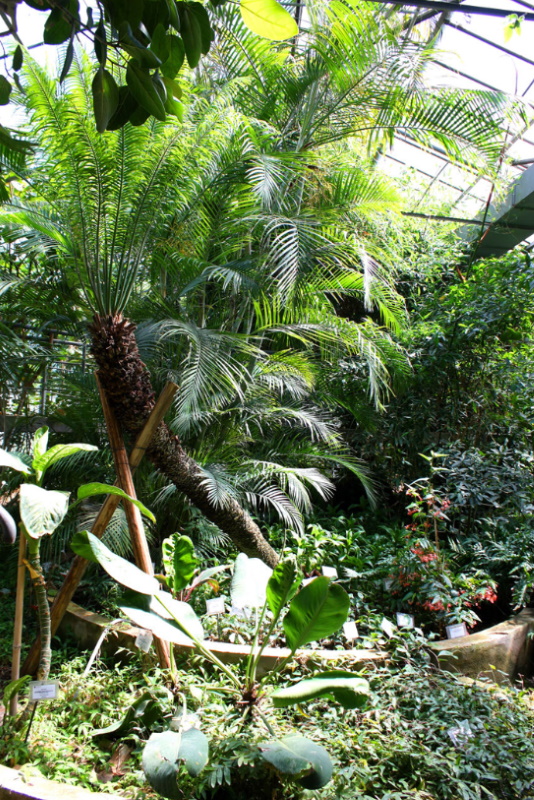
The Founding of the Botanical Garden
The Botanical Garden is located in Villa Corsini Park, once the residence of Christina of Sweden, and on part of the archaeological site of the Horti Getae, the gardens of Septimius Severus’s son, Geta, Caracalla’s brother.
It was here that the Botanical Garden was relocated in 1883 after having moved several times.
Due to its significant scientific and naturalistic value, the Botanical Garden is now one of the museums of the Department of Environmental Biology at Sapienza University of Rome.
When to go
Visiting the garden is a wonderful experience in every season because nature is always changing: in Spring, don’t miss the Hanami, the stunning cherry blossoms in the Japanese Garden; in Summer, you can enjoy late-blooming flowers, such as rhododendrons. Fall is the season of foliage, and the maple leaves take on beautiful colors, with shades ranging from yellow to orange to red!
Visit the Botanical Garden
The entrance to the Botanical Garden is at Largo Cristina di Svezia, 24 00165 Roma open in Google Maps
Open daily, including Sundays and holidays, from 10:00 AM to 6:30 PM (last admission at 5:30 PM).
Ticket prices
Full Price €5.00
Reduced Price €4.00 Reserved for children and teens aged 6 to 18, seniors over 65, school groups, university students from other universities, and members of affiliated organizations.
Free admission Reserved for children aged 0–5, people with disabilities accompanied by a caregiver, staff and students of Sapienza University of Rome, and teachers accompanying school groups.
More information about tickets, reservations and events can be found on the official website www.ortobotanicodiroma.it
Click here to book a private guided tour of the Botanical Garden.
3. Villa Celimontana
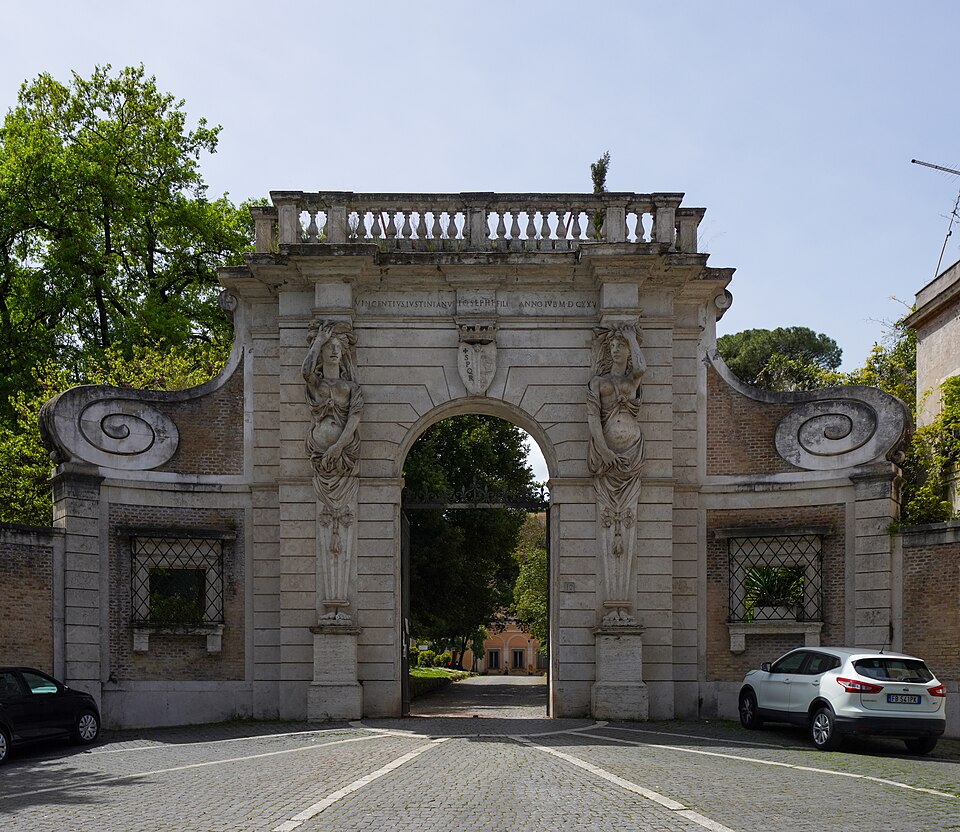
Villa Celimontana is one of the villas most beloved by Romans.
It is located just a stone’s throw from the Colosseum, on the Celio Hill. With its tree-lined avenues, it’s the perfect place to unwind with a stroll or enjoy a picnic. During the summer, the park hosts live music concerts and other free events at night.
History of the Area
The area in Roman times was home to the castra of the 5th Cohort of the Vigiles, the main operational base of the fifth unit of “firefighters” and night watch established by Emperor Augustus in 6 AD., and the Basilica Hilariana, identified as a place of worship for Cybele and Attis.
During the Middle Ages, the area was home to vegetable gardens and vineyards. Around the mid-16th century, the approximately 110,000-square-meter site was purchased by Giacomo Mattei, who gave it as a dowry to his daughter Claudia, the wife of Ciriaco Mattei. He transformed it into a park filled with ancient sculptures and fountains, commissioning many artists of the time.
Among the remarkable works still on display there is the Egyptian obelisk of Ramses II, which originated from the Temple of the Sun in Heliopolis and, during the Roman era, adorned the Sanctuary of Isis Capitolina. After standing for a long time at the base of the steps leading up to the Ara Coeli, it was donated by the Senate to Ciriaco Mattei in 1582.
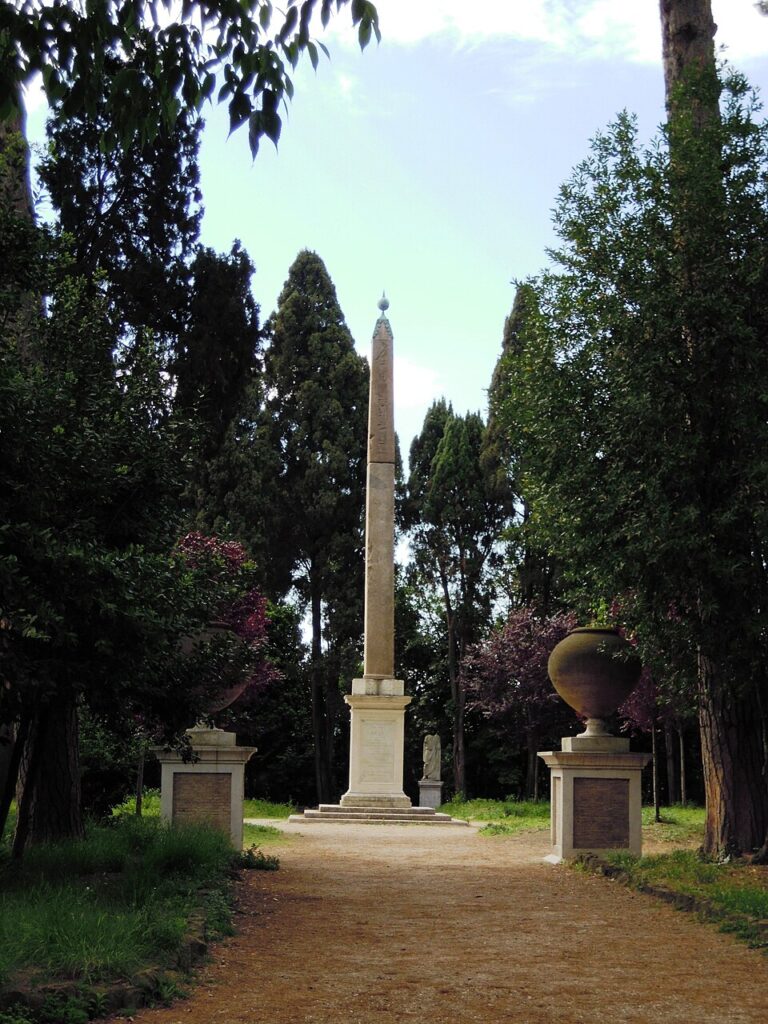
The villa’s historic collections were subsequently dispersed, and in the 19th century the park was redesigned and transformed into an English-style garden.
After changing hands several times, the villa was purchased by the state in 1915 and transferred to the City of Rome in 1925. It was opened to the public in 1928.
The Casino Mattei is currently home to the Italian Geographical Society.
How to get to Villa Celimontana
Entrances: Via della Navicella, 12 open in google maps Piazza SS. Giovanni e Paolo open in google maps
Hours: 7:00 a.m. to sunset (during the summer until late at night)
Check out the summer evening events schedule: www.villagecelimontana.it.
Click here to book a private guided tour of Villa Celimontana and the Celian Hill.
4. Villa Farnesina
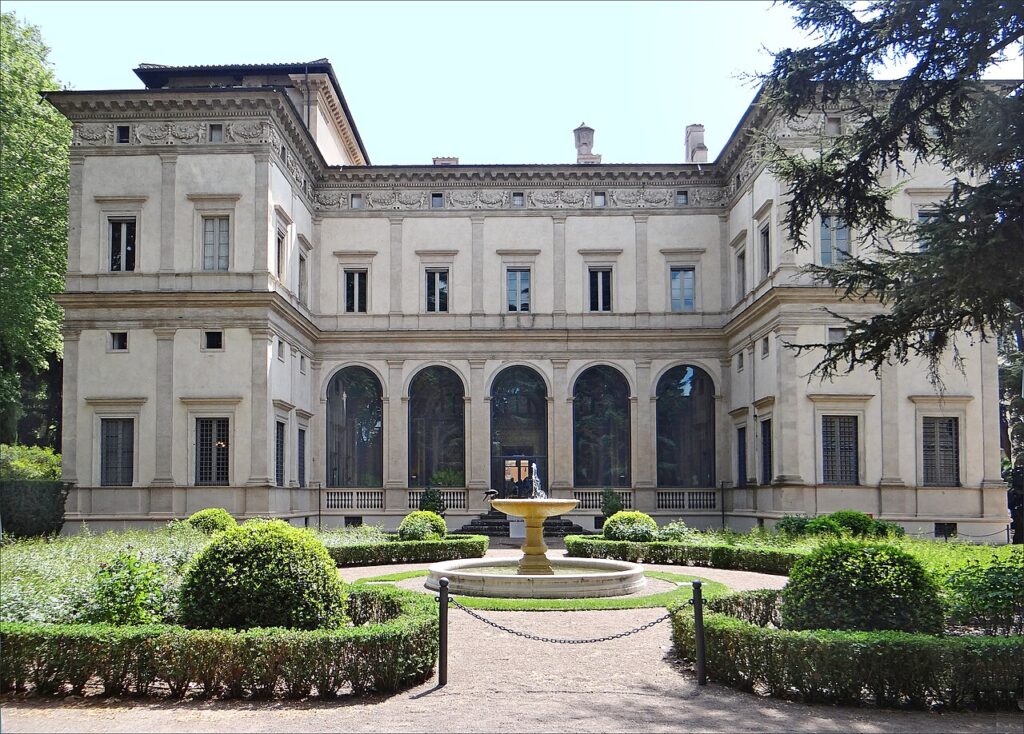
Located in the heart of Trastevere, Villa Farnesina is a veritable treasure trove of Renaissance art. Here you can stroll through the avenues of the Italian-style gardens and admire Raphael’s frescoes housed within the Villa, the most elegant residence of the Roman Renaissance.
History
Originally the suburban residence of the wealthy Sienese banker Agostino Chigi, it was built between 1506 and 1512 by Baldassarre Peruzzi. Among the great artists who contributed to its decoration was the master painter Raffaello Sanzio, who painted the famous frescoes Nymph Galatea and The Loggia of Cupid and Psyche.
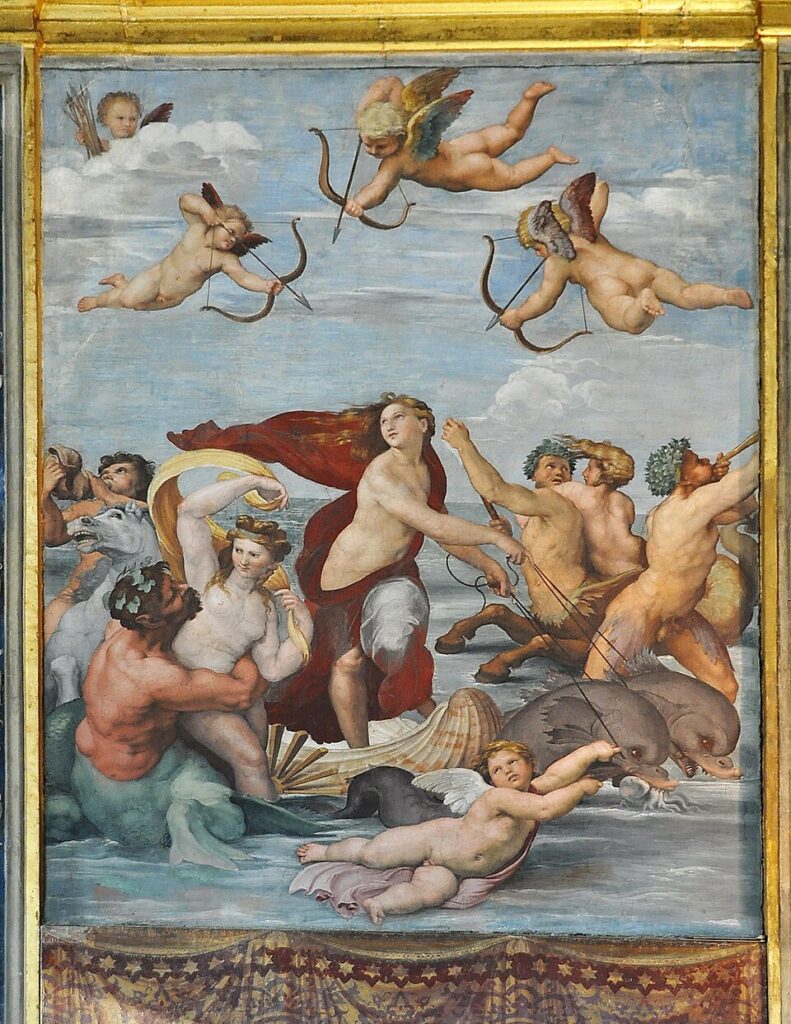
Agostino Chigi turned it into a major center of culture and patronage hosting memorable banquets that welcomed the most distinguished figures of his time, including poets, princes, cardinals, and the pope himself. Contemporary accounts note that, in 1518, on the occasion of the baptism of his eldest son, Lorenzo Leone, the gold and silver tableware used for the luncheon was thrown into the Tiber as a sign of generosity, although it seems that the shrewd banker had secretly had nets spread out in the river, thereby recovering the precious tableware!
In 1590, it was purchased by the young Cardinal Alessandro Farnese, from whom the name “Farnesina” derives, to distinguish it from the Palazzo Farnese across the river; according to a design by Michelangelo, a bridge over the Tiber was to connect the two Farnese properties.
In 1735, through the estate of Elisabetta Farnese, the villa passed to the Bourbons of Naples. In 1927, it was purchased by the Italian government to serve as the headquarters of the Royal Academy of Italy. The villa currently serves as a representative office and museum for the Accademia Nazionale dei Lincei.
How to get to Villa Farnesina
Entrance: Via della Lungara, 230 – 00165 Roma open in google maps
Open every weekday From 9:00 AM to 2:00 PM
For more information visit the official website: www.villafarnesina.it
Click here to book a private guided tour of Villa Farnesina and the extraordinary frescoes by Raphael.
5. Villa Torlonia
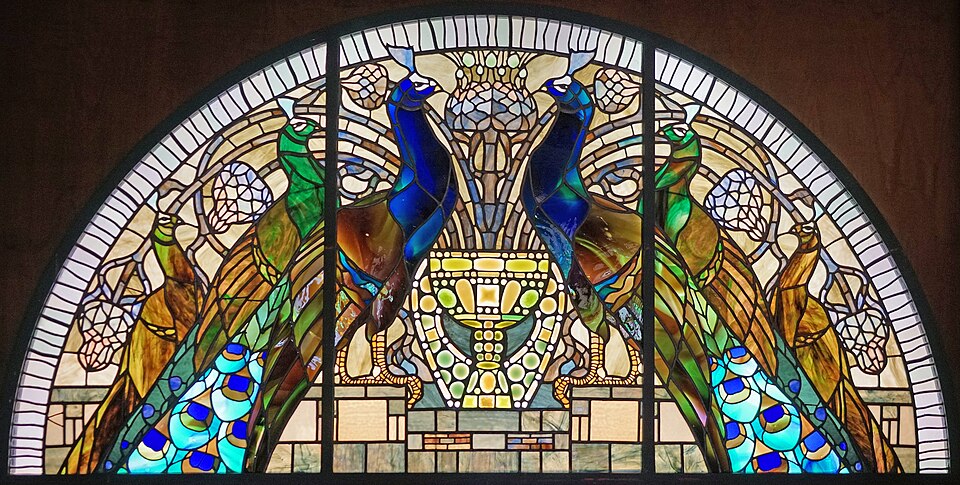
Among Rome’s parks and historic villas, Villa Torlonia is undoubtedly the most curious and extravagant. Located along Via Nomentana, it is easily accessible by bus from Termini Central Station.
History
The land on which Villa Torlonia stands was once owned by the Pamphili family, who used it as a farm with reed beds, orchards, and vineyards. After being purchased by the Colonna family, it was sold in the late 19th century to Giovanni Torlonia, who transformed it into a sumptuous residence. The renovation project was entrusted to Giuseppe Valadier who designed the Casino Nobile, the Casino dei Principi, and the Scuderie.
Later, his heir, Alessandro Torlonia, continued to enhance the property by constructing neoclassical faux ruins, the Temple of Saturn, and other buildings. The area was completely transformed in the style of English “romantic gardens,” featuring winding paths, exotic plants, small ponds, and buildings of unusual design, such as the Swiss Chalet and two obelisks made of pink granite, dedicated to the memory of Giovanni and Anna Maria Torlonia.
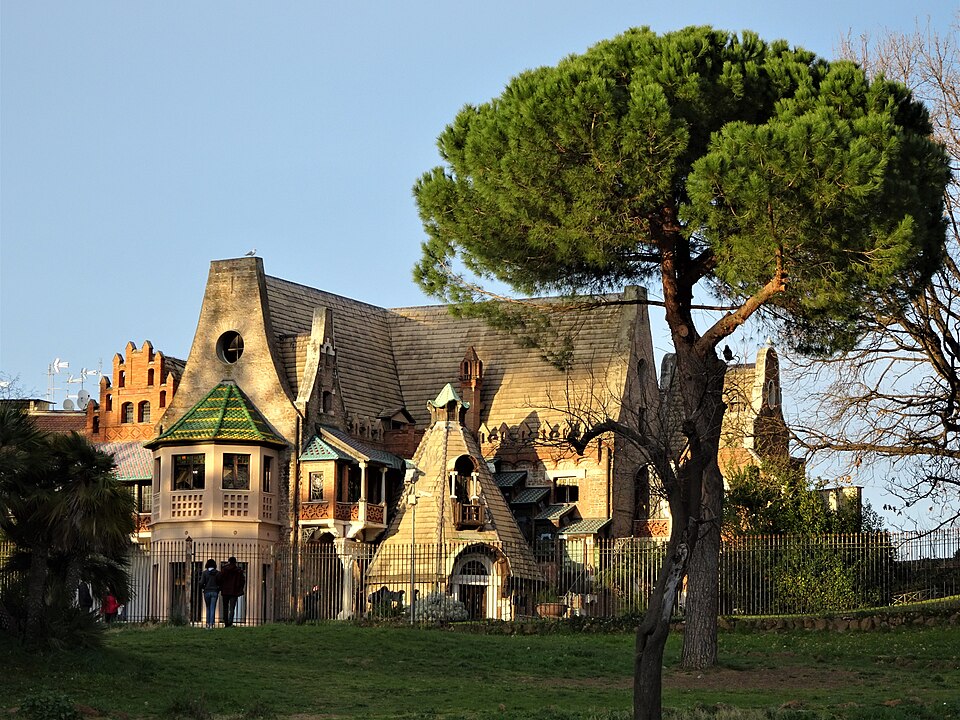
Other buildings were constructed by the new heir, Giovanni Torlonia, who radically transformed the Capanna Svizzera into the eclectic Casina delle Civette.
After a long period of neglect, Mussolini moved there between 1925 and 1943, and the park was converted into wartime vegetable gardens: fields of wheat and potatoes, chicken coops, and rabbit hutches. Anglo-American troops occupied the site from 1944 to 1947.
In 1978, Villa Torlonia was acquired by the City of Rome and transformed into a public park featuring stunning vegetation: holm oaks, bamboo, locust trees, blue palms, California palms, centuries-old chestnut trees, and fruit trees—fig, cherry, plum, apple, and wild apple.
Currently Villa Torlonia is home to three museum venues: the Casina delle Civette Museum, dedicated to stained glass; the Casino Nobile Museum, which houses the Museum of the Villa and the Scuola Romana collection; and the Casino dei Principi, which hosts temporary exhibitions. Definitely worth a visit are the Casina delle Civette and the Serra Moresca, which has recently been restored to its former glory.
How to get to Villa Torlonia
Entrances: 70 Via Nomentana, open in Google Maps Via Siracusa, open in Google Maps Via L. Spallanzani open in Google Maps
Hours: October 1 through March 31: 7:00 AM to 7:30 PM; April 1 through September 30: 7:00 AM to 8:30 PM
For more information about the Museums visit the official website: www.museivillatorlonia.it
Click here to book a private guided tour of Villa Torlonia and its extraordinary museums.
Photo Credits Villa Celimontana Entrance
Photo Credits Villa Celimontana Obelisk